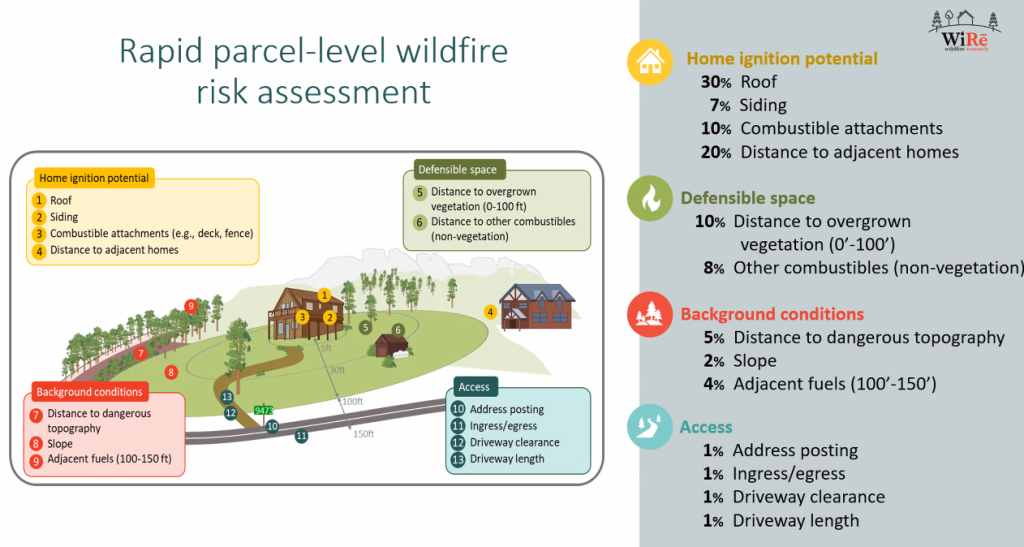
Socio-ecological considerations for sustainAble Fuel treatments to Reduce wildfire Risk (SAFRR) is a research project aimed at helping communities and agencies identify the best strategies for implementation of fuel treatments to meet ecological, social, and financial goals.
Fuel treatments are among the main tools that land management agencies, landowners, and communities use to reduce risk to residents and infrastructure. However, effective fuel treatments require significant planning, implementation costs, and maintenance. They can also be controversial: they may face resistance and affect the attitudes and behaviors of nearby residents.
Ecological
Ecological effects of fuel treatments and their influence on wildfire behavior
Social
Community perspectives on wildfire risk and fuel treatments
Financial
Costs of planning, implementing, and maintaining fuel treatments
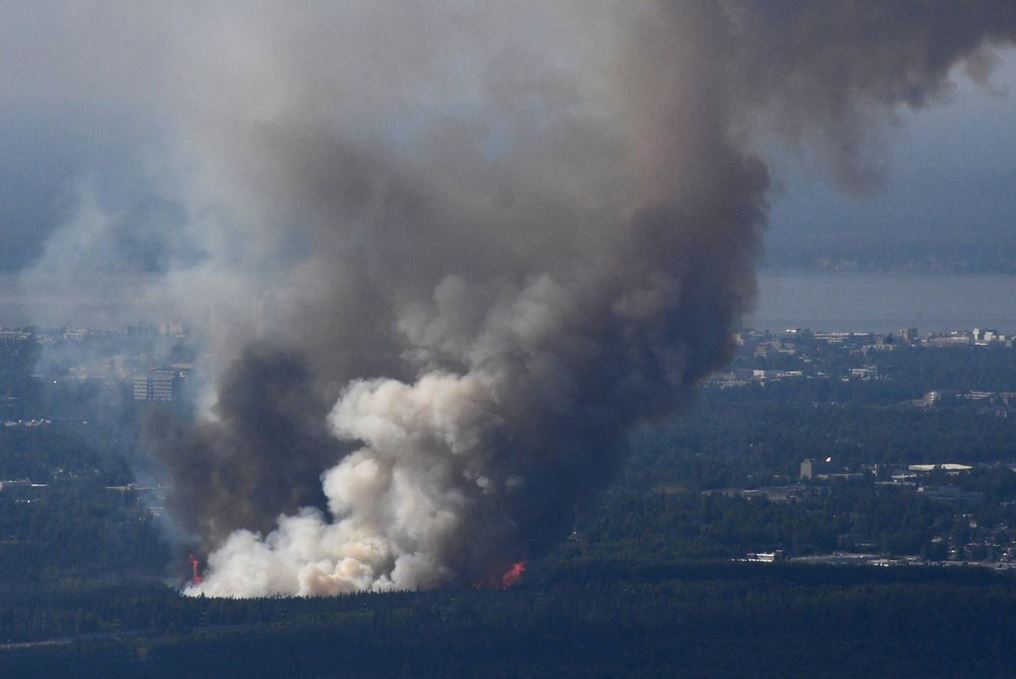
About the Research
SAFRR project team members will work with public land and wildfire practitioners; Indigenous organizations; and communities on the Kenai Peninsula, in Interior Alaska, and Anchorage, and Whitehorse, Yukon Territory, to co-produce an integrated assessment of fuel treatments that will include:
- preferred strategies, barriers to implementation, and key policies regarding fuel treatments
- insights into how vegetation responds to different treatments, installation and maintenance costs
- short-term and long-term ecological effects of fuel treatments and their influence on wildfire behavior
Problem Statements
Ecological
- What type of forest returns after fuel treatment, and how does it differ between different prescriptions (i.e., shaded fuel breaks vs. bulldozing?)
- Knowing that aspen and birch are less flammable than spruce, how can we design prescriptions that nudge these fuel breaks to come back as these safer forests?
Social
There is a lack of systematic, actionable data to help reveal pathways to community wildfire adaptation and resilience.
Through paired biophysical and social data, we will examine:
- To what extent are study participants engaged in wildfire risk mitigation and preparedness?
- How acceptable are fuel treatments on adjacent public lands? And what is the relationship between preferred management objectives and community expectations of wildfire?
- How do results from Alaska study communities compare to those in other fire-prone communities in the western U.S. where the WiRē Approach has been implemented?
Curious about what fuel treatments might look like 1, 10, or 50 years down the road?
This was used in focus groups in Anchorage to learn more about the public’s perceptions of fuel treatments. Read our short policy brief!
Scenario 1: Cleared fuel break (Shearbladed)
Years 1 – 5
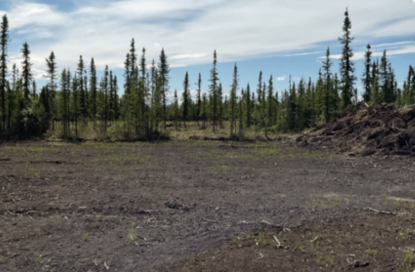
In a shearbladed fuel break, all vegetative fuels are removed by a bulldozer to create breaks in the forest canopy. The fuel break significantly reduces the risk and severity of a wildfire should one occur. These breaks are also key areas for firefighters. Planes can drop fire retardant along the break, and crews can easily get in the area to fight the fire.
Years 10 – 15
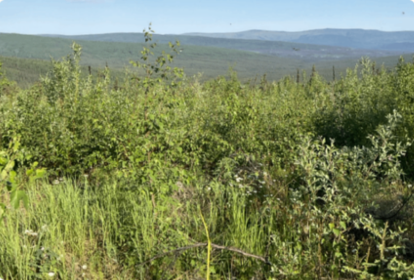
In cleared fuel breaks the first vegetation to regrow will be both fast growing deciduous species (birch, aspen, willows) and slower growing conifers (black and white spruce). Wildfire risk will remain low since fuel density has not recovered and deciduous shrubs have higher moisture content. The fuel break will remain a useful resource for firefighting efforts although the vegetation regrowth will make it more difficult for firefighters to access the area for suppression.
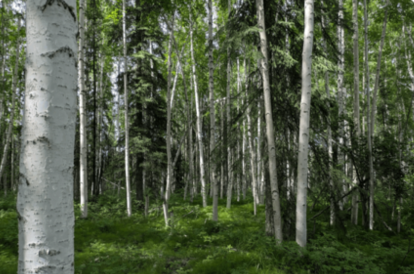
Years 40 – 50
In 40 to 50 years after treatment we expect a mature forest of deciduous and conifer trees to have been established. The composition of that forest will depend greatly on the availability of deciduous and conifer seeds at that location, as well as the fire risk.
Check out our Sustainable Fuel Treatment Story Map.
Team Members
Principal Investigators
Dr. Jennifer Schmidt
Primary Investigator (UAA), overall
Assistant professor of natural resource management and policy at the Institute for Social and Economic Research, University of Alaska Anchorage
Dr. Michelle Mack
PI for NAU
Regents’ professor of ecosystem ecology in the Center for Ecosystem Science and Society and the Department of Biological Sciences at Northern Arizona University.
Dr. Hannah Brenkert-Smith
PI for CU
Research associate professor at University of Colorado’s Institute of Behavioral Science. WiRē team member.
Will Putman
PI for TCC
Forester with the Tanana Chiefs Conference with extensive experience in forest management in Alaska and use of fuel treatments around rural Alaska communities.
Co-Principal Investigators
Dr. Matthew Berman
Co-PI
Professor of economics at the Institute for Social and Economic Research, University of Alaska Anchorage
Dr. Xanthe Walker
Co-PI
Assistant research professor in the Center for Ecosystem Science and Society and the Department of Biological Sciences at Northern Arizona University.
Dr. Joseph Little
Co-PI
Assistant professor of economics in the W.A. Franke College of Business at Northern Arizona University and an affiliate researcher with the International Arctic Research Center.
Senior Personnel & Collaborators
Alison York
Senior Personnel
Alaska Fire Science Consortium (AFSC) coordinator and is an expert in Alaska fire ecology, tundra fire, fire management, and science communication.
Dr. Patricia Champ
Collaborator
Economist at the Human Dimensions Program at the U.S. Forest Service’s Rocky Mountain Research Station in Fort Collins. WiRē team member.
Chris Barth
Collaborator
Fire mitigation specialist with the Bureau of Land Management. WiRē team member.
Chris Moore
Collaborator
Fire analyst with the Bureau of Land Management.
SAFRR Highlights & Resources
WUI-Cat
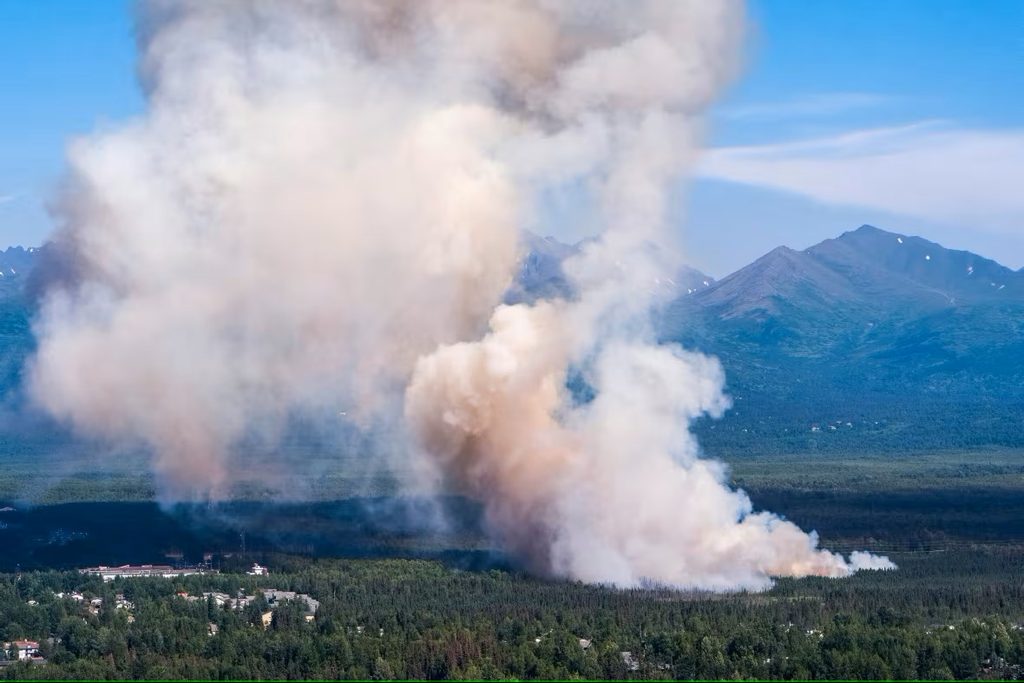
WUICAT (Wildland Urban Interface Community Action Team) is a volunteer organization comprised of community members living throughout the Municipality of Anchorage.
Meet Ed Graham
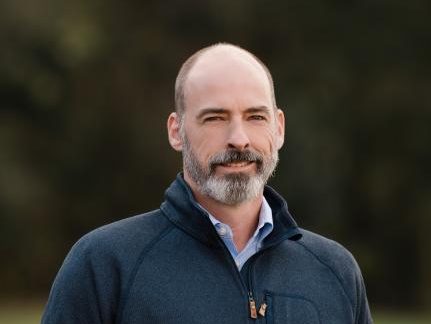
SAFRR undergraduate student is honored for his work on our new photo geodatabase.
Wildfire Risk Assessment in Alaska
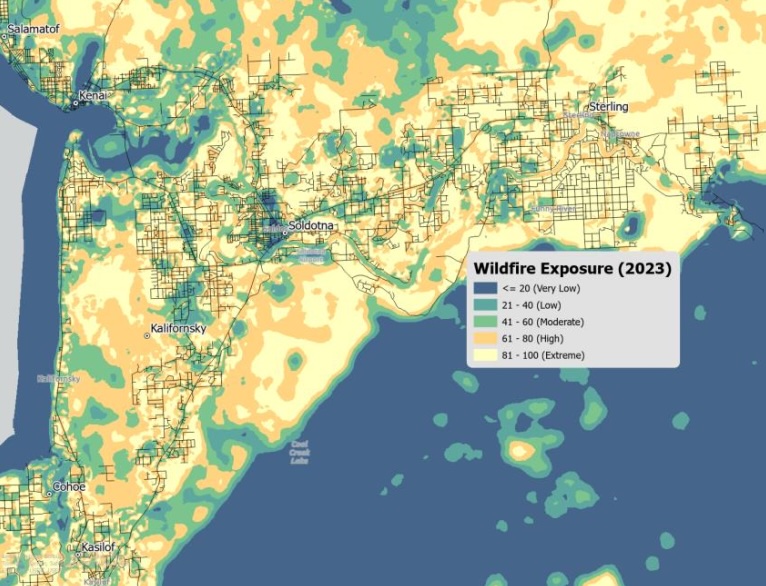
Assessing wildfire risk to structures in Alaska to help identify where mitigation efforts can protect property and lives.
Tools & Partners
Fuel Treatment Dashboard
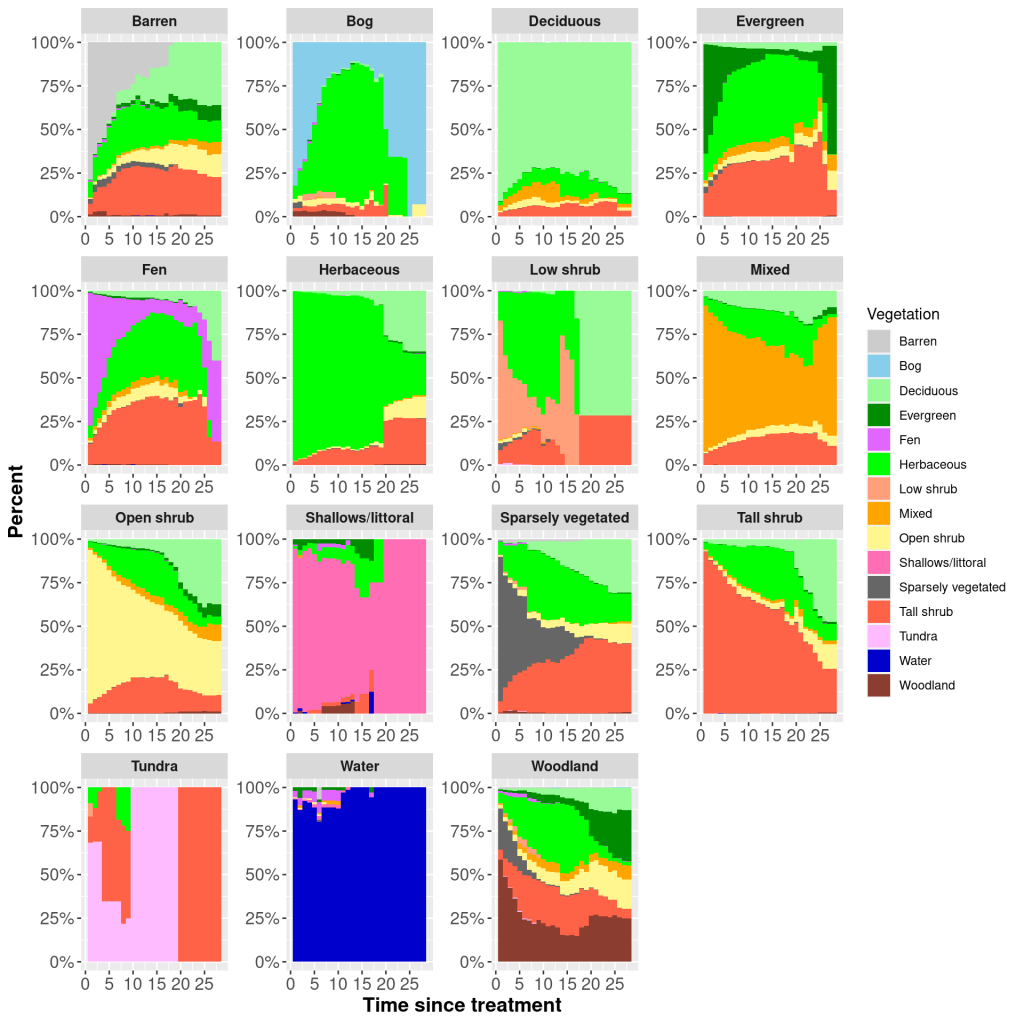
Explore how different fuel treatments affect vegetation succession in Alaska.
WiRē Wildfire Research Center
Wildfire Research Center is one of the SAFRR partners.
The WiRē Approach enables partners to effectively allocate resources and engage with residents. Leveraging lessons learned across projects, the WiRē Center pursues scientific approaches to inform conversations and decisions about wildfire adaptation.
Parcel Risk Assessments
The WiRe team conducted surveys on the Kenia Peninsula. If you are interested in hearing preliminary results please contact Dr. Hannah Brenkert-Smith hannahb@colorado.edu.
We are in the process of conducting similar surveys in Anchorage, Alaska.